
Epstein's Legal Strategy Reveals Link to OneCoin Crypto Scheme Involving NY Corruption


In the summer of 2019, Jeffrey Epstein had been in federal custody for less than a week when his legal team made a seemingly random request. A request connecting Epstein to OneCoin, the massive multi-level marketing cryptocurrency scheme which eventually led to several arrested and the founder, Ruja Ignatov to flee and be on the run and on the FBI's Most Wanted list to this day.
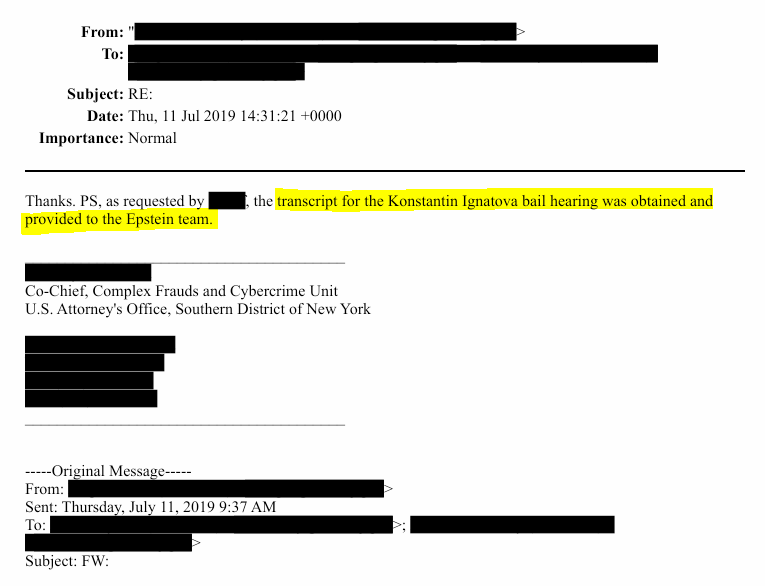
On July 11, an internal email from the U.S. Attorney’s Office for the Southern District of New York noted, almost in passing: "PS, as requested by [redacted], the transcript for the Konstantin Ignatov bail hearing was obtained and provided to the Epstein team." Konstantin Ignatov is the brother of Ruja Ignatov, and also the co-founder of OneCoin.
That single line sat buried in the massive document dump found in the Epstein files released in 2026. When you pull the actual document they asked for, the intrigue sharpens.
Why Epstein's Team Wanted the OneCoin Transcript
The file itself is a 32‑page government opposition brief filed on June 27, 2019, in United States v. Konstantin Ignatov. It’s a brutally constructed argument urging Judge Edgardo Ramos to keep Ignatov, brother of fugitive OneCoin founder Ruja Ignatov, behind bars while awaiting trial.
Prosecutors laid out a devastating portrait: Ignatov had no ties to the United States and carried a German passport from a country that refuses to extradite its citizens. His sister had already vanished the moment sealed charges were filed in 2017. He had access to hundreds of millions in OneCoin cryptocurrency proceeds hidden away. He had lied repeatedly to border agents, case agents, and even Pretrial Services. And when confronted with all of that, he offered the classic "wealthy defendant" bail package: private armed security, a $20 million bond, GPS monitoring, home confinement, no internet.
The government dismantled every piece of it, citing precedent after precedent, including prior attempts by affluent defendants to build "private jails" in the Southern District. Included in the filing was the full transcript of Ignatov’s March 2019 detention hearing, where Magistrate Judge Gail Standish had already ordered him held.
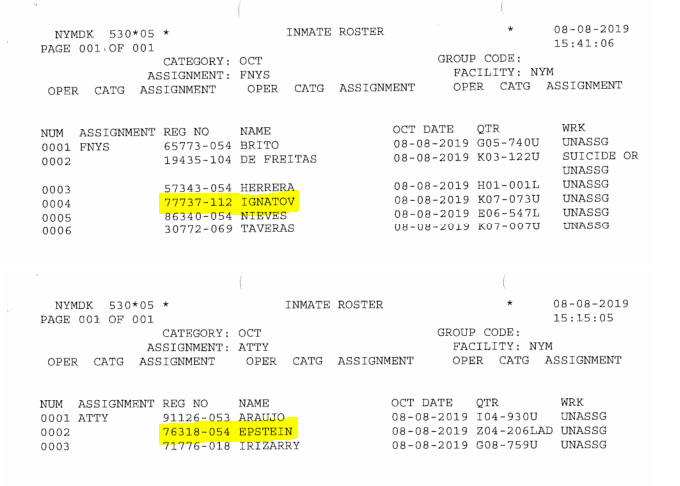
This was the document Epstein’s lawyers wanted nine days after his own arrest. They cared because it was a perfect dress rehearsal for the fight they were about to have. Additional inmate prison records in the 2026 files show that Epstein and Ignatov were held in the same federal facility at the same time in 2019. But not because Epstein was directly or even indirectly involved in the OneCoin MLM, at least that we can see on the surface so far.
Epstein’s lawyers were preparing emergency bail motions. Their client faced the same accusations the government would level at him: flight risk, massive hidden wealth, powerful co-conspirators who had already fled or died, and the ability to live like a king anywhere in the world. The Ignatov filing gave them the government’s own playbook, the exact arguments SDNY was using to win these fights in the same building, before the same judges.
It was aggressive, expensive, leave-no-stone-unturned defense work. But here’s where the story gets its extra layer of Epstein-related elite intrigue.
The Manhattan Power Network Behind Epstein’s Legal Favors
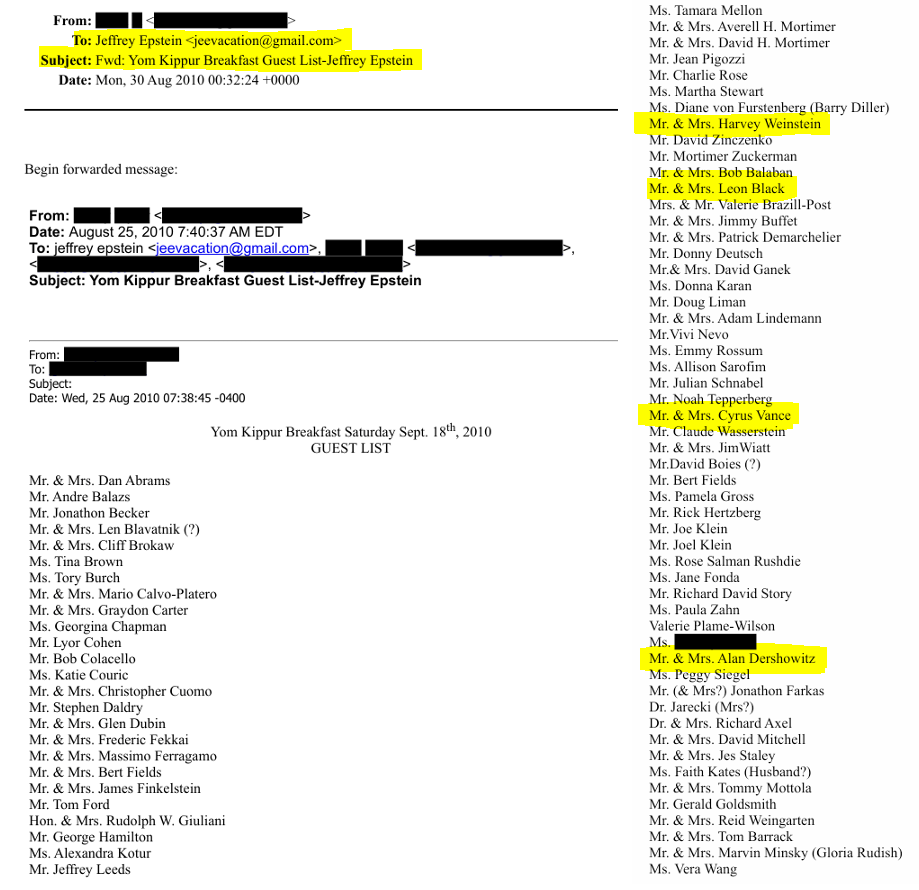
Back in August 2010, long before anyone outside Palm Beach was paying attention, Jeffrey Epstein hosted a Yom Kippur breakfast. The guest list, which has surfaced in the Epstein files, included a who’s-who of Manhattan power: Harvey Weinstein, Leon Black, Alan Dershowitz, and Mr. & Mrs. Cyrus Vance.
Cyrus Vance Jr. had just been elected Manhattan District Attorney.
Fast-forward just five short months later to January 2011. Vance’s Sex Crimes Unit, walked into a Manhattan courtroom and asked a judge to downgrade Epstein’s sex-offender status from Level 3 (highest risk) to Level 1 (lowest). The judge was stunned. “I have never seen the prosecutor’s office do anything like this,” she said on the record.
A Pattern of Leniency for the Well‑Connected
That case became one of the defining examples of the criticism that plagued Cyrus Vance for the rest of his career: that his office was too lenient with the rich and connected. The same pattern appeared with Harvey Weinstein and his sex crimes, similar to Epstein, where he initially declined to prosecute in 2015, the Trump SoHo case, and others.
Other documents uncovered in the Epstein 2026 files, shows whistleblower accusations in 2019 of Cyrus Vance and alleged corruption, associated with Epstein, a bribe scheme by Alan Dershowitz, and another bribe scheme involving Gigi Jordan.
By 2021, the cumulative weight of those decisions helped push Vance to announce he would not seek a fourth term and was resigning. Critics saw it as the end of an era of elite-friendly justice in Manhattan, catering to the likes of Epstein and Weinstein.
In addition, Vance appeared alongside federal prosecutors in the March 2019 press conference announcing Konstantin Ignatov’s arrest as part of a joint investigation for a case with New York victims.
The OneCoin transcript showed how Jeffrey Epstein’s defense machine operated at full throttle, scouring recent high profile filing in the Southern District for any tactical advantage. It showed how Cyrus Vance’s office had earned a reputation for quid pro quo and leniency toward the powerful long before these files ever surfaced.
In March 2024, Konstantin Ignatov, was released from prison for time served, according to a report from Bloomberg. Ignatov was ordered to spend the next two years under court supervision and hand over just $118,000 of the funds he made while working at OneCoin.
As of March 2026, Ruja Ignatov is still at large and remains on the FBI's Ten Most Wanted Fugitives list (the only woman currently on it). The U.S. State Department is offering up to $5 million for information leading to her arrest and/or conviction. She disappeared in October 2017 (days after the first U.S. indictment) while fleeing from Sofia, Bulgaria, to Athens, Greece, and has not been publicly seen since.
In the end, this rabbit hole didn’t lead to a secret Epstein-OneCoin scandal. It led to a clearer view of how Epstein’s world operated: a relentless legal machine, a network of powerful allies, and a justice system that bent differently when the defendant had the right connections.
We created an Epstein Crypto Email archive to go through all the newly released Epstein emails relating to cryptocurrency and blockchain, to search through all the communications for important information relating to this topic. Try it out!