
How Epstein-Style Troll Farms Shaped Bitcoin's Path Forward

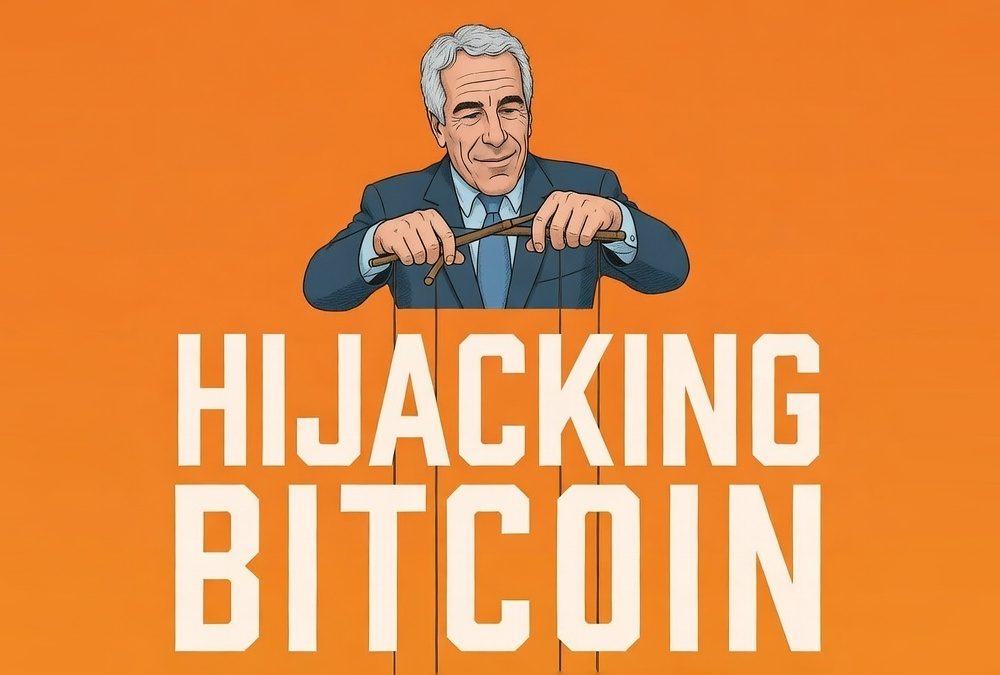
In the contemporary digital landscape, the authenticity of public discourse is frequently compromised by "astroturfing," the strategic manufacturing of a false grassroots consensus. These orchestrated campaigns are designed to deceive the public into believing that a specific narrative is organic, when it is, in fact, the calculated product of professionalized manipulation. This is viewed not merely as "fake news," but as a sophisticated form of reputational laundering that erodes the very foundations of consensus reality.
The mechanics of these operations are no longer theoretical. Historical precedents, such as the documented 2010 disinformation campaign executed on behalf of Jeffrey Epstein, provide a grim blueprint for how information ecosystems can be subverted.
This same blueprint is central to long-standing allegations within the Bitcoin and crypto space, specifically relating to the Block Size Wars and beyond. By analyzing the anatomy of professional troll farms, we can better evaluate community claims of artificial influence and the potential subversion of digital sovereignty.
The Anatomy of a Professional Troll Farm
The inner workings of a troll farm reveal a highly structured, corporate environment dedicated to the deliberate erosion of truth. Recent reporting by Al Jazeera has shed light on these operations, which often reside within the swanky financial districts of Manila, Philippines, although it's not constrained to this country, as other countries have similar operations such as India, Malaysia, and elsewhere. These content farms (also sometimes referred to as "bots") are not basement-dwelling amateurs; they are professionalized entities where disinformation is treated as a scalable service that comes at a high cost.
Testimony from a Philippine whistleblower identified as "Junjun," a former employee of a public relations agency in Manila, highlights the clinical nature of this work:
"Trolling is intentional work. When I was a troll I deliberately spread disinformation and kept amplifying them."
The operational model described in the report relies on a rigid system of incentives:
- Performance Bonuses: Trolls receive cash incentives for successfully attracting large followings or generating high engagement on platforms like Reddit, Facebook, YouTube, X (formerly Twitter), and TikTok.
- Narrative Saturation: The core objective is "whitewashing" - scrubbing the internet of negative publicity to "populate the information ecosystem" with specific, sanitized messaging.
- Coordinated Amplification: Content is systematically boosted through artificial engagement to simulate popular agreement, effectively drowning out dissenting voices.
Jeffrey Epstein’s 2010 Disinformation Campaign
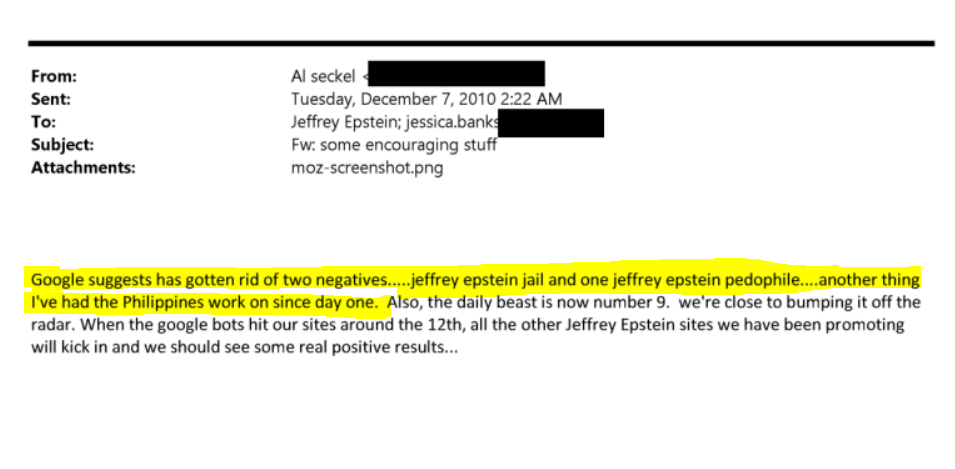
Jeffrey Epstein’s efforts to rehabilitate his image in 2010 serve as a chilling precursor to modern digital warfare. New evidence released by the US Department of Justice of Epstein files reveals that Epstein utilized Philippine-based PR agencies to systematically purge his criminal history from the public record. At the time, such operations were not widely labeled as "trolling" or "bot farms" yet they utilized the exact methodology seen in today’s information warfare.
DOJ emails from December 2010 detail an "intense" battle over Epstein’s Wikipedia page, where paid actors fought a continuous war of attrition against editors attempting to maintain the accuracy of his criminal past. The campaign was remarkably effective; within two months of its inception, emails suggested the operation was a success. The terms "pedophile" and "jail" no longer appeared among the top search results for Epstein’s name. This demonstrated the terrifying power of professionalized services to alter public perception through search engine and platform manipulation, creating a manufactured reality for the casual observer.
Allegations of Subversion in the Block Size Wars
The tactics observed in the Epstein case have led to persistent allegations within the cryptocurrency sector. Specifically, many community participants have raised claims regarding the Block Size Wars, the pivotal era in Bitcoin’s history that determined its technical and philosophical trajectory, to where we are today.
According to past community discourse, "astroturfing" may have been deployed to influence technical consensus and marginalize proponents of on-chain scaling. These allegations center on several key entities and figures at the time:
- Blockstream: Often cited in this theory as a central force in steering the narrative toward off-chain solutions. Blockstream has recently come under fire due to their connections with Epstein, including socially influencing community sentiment, with some instances dating back many years now coming back to light with a fresh perspective.
- Adam Back and Peter Todd: Targeted in community claims as influential figures whose advocacy was allegedly part of a broader, potentially coordinated effort to dictate protocol direction. Adam Back as part of Blockstream, has also been facing backlash recently due to his connections with Epstein. Peter Todd has long been the target of scrutiny, when as early as 2013 it was discovered Todd was working with government agents in attempt to subvert the big block on-chain scaling movement.
📺 Have you seen Peter Todd's propaganda video to keep the #Bitcoin block size limit at 1MB?
— DΛVID (@DavidShares) July 12, 2024
Back in 2013, Peter Todd in discussions with "John Dillon", decided to make a video called "Keep Bitcoin Free" about the importance on keeping the Bitcoin blocks small. This is the… pic.twitter.com/tbGphZrW5D
Video made in May 2013 by Peter Todd advocating to keep the Bitcoin block size at 1MB
Through a sociological lens, the parallels between Epstein's troll (bot) farms and what happened with Bitcoin and during controversial timse such as the Block Size Wars, is striking.
Proponents of these claims suggest that the same "whitewashing" and "narrative control" tactics seen in Manila with Epstein were utilized to create a perceived majority support for specific technical changes in Bitcoin and crypto, effectively sidelining the organic evolution of the network.
After many of the newly released Epstein emails and knowing his influence over the trajectory of Bitcoin, it's not hard to see how these connect and overlap.
Comparative Analysis: Tactics of Influence
The following table synthesizes the documented tactics from the Al Jazeera reporting against the specific historical allegations within the Bitcoin and crypto information ecosystem.
Tactical Category | Evidence from Philippine/Epstein Case | Allegations in the Bitcoin Space |
Reputation Management | Scrubbing "pedophile" and "jail" from search results via PR agencies. | Alleged marginalization of scaling advocates to manipulate community sentiment. |
Platform Manipulation | Coordinated "intense battle" over Wikipedi edits and search rankings. | Use of coordinated social media accounts to simulate consensus on technical forks on Reddit, X, and other social media. |
Narrative Control | Populating the ecosystem with positive messaging to "whitewash" history. | Influencing protocol direction through the perception of overwhelming majority support (consensus). |
Technological Scaling | Use of spam bots and accounts with coordinated comments to boost engagement. | Use of AI-driven bot accounts and coordinated actors to amplify specific technical narratives. |
Take this video as another example. The late Toni Lane Casserly, who co-founded CoinTelegraph, had this to say about the Bitcoin and crypto communities being manipulated through fake online accounts (bots/trolls) and astroturfing.
This is what's happening in #Bitcoin and crypto communities (and other kinds too). This video is a bit dated now but it's still happening today, using censorship and manipulation to change the narrative. The woman speaking is the late Toni Lane Casserly, co-founder of… pic.twitter.com/vrND2BYsyR
— DΛVID (@DavidShares) September 19, 2023
The Evolution of Disinformation From Video Narratives to AI
Disinformation has matured beyond simple comment sections on Reddit and other media platforms. As noted by experts in the Al Jazeera report, campaigns now leverage complex "video narratives."
A prominent example is the viral spread of false stories concerning Philippine President Ferdinand Marcos Jr.’s family and their supposed "400,000 metric tons of gold," a narrative designed to rewrite historical fact through sheer repetition.
This evolution is further accelerated by artificial intelligence, which allows troll and bot farms to generate seemingly organic, high-fidelity content at an industrial scale. In the crypto ecosystem, this makes the task of discerning "authentic community sentiment" from "manufactured consensus" nearly impossible. When AI can simulate the nuances of a technical debate, the foundational principle of decentralized, community-driven development is placed under existential threat.
Seeking Consensus in a Manipulated Landscape
The fundamental tension within decentralized communities lies between the mathematical certainty of the protocol and the vulnerability of the social layer.
Technologies like Bitcoin have Proof-of-Work (PoW) hashing which provides a revolutionary path to consensus that functions without the need of humans. By moving agreement to a cryptographic layer, the goal is to remove the biases and subversion inherent in human-led governance. However, the Al Jazeera report reveals a stark reality: while a cryptographic ledger may be immutable, the "information ecosystem" surrounding it is not.
The documented history of troll farms proves that disinformation is "intentional work" designed to distort the human perception required for social consensus. Just as Jeffrey Epstein's team engaged in an intense battle to manipulate Wikipedia and scrub the internet of his criminal past, modern operations now use seemingly coordinated comments and artificial intelligence to populate online spaces with misleading narratives. These actors are not merely critics; they are professionals who receive cash bonuses for high engagement, creating a manufactured reality that can sway even the most decentralized community.
Ultimately, the most secure protocol cannot protect a community if its members are making decisions based on a populated information ecosystem of misleading and false content. Anti-disinformation advocates argue that purely technical or passive solutions like fact-checking are insufficient; instead, there is a need for an oversight body created among the stakeholders themselves to ensure credibility and independence.
Without identifying and dismantling the so-called troll farms, the social layer of any digital movement remains at risk of being saturated by paid actors and bots/trolls, effectively drowning out the authentic human voice that decentralized technologies were originally designed to empower.
We created an Epstein Bitcoin Email archive to go through all the newly released Epstein emails relating to Bitcoin, cryptocurrency, and blockchain, to search through all the communications for important information relating to this topic. Try it out!