
Epstein Emails Expose Ties to Zcash Co-Founder Madars Virza

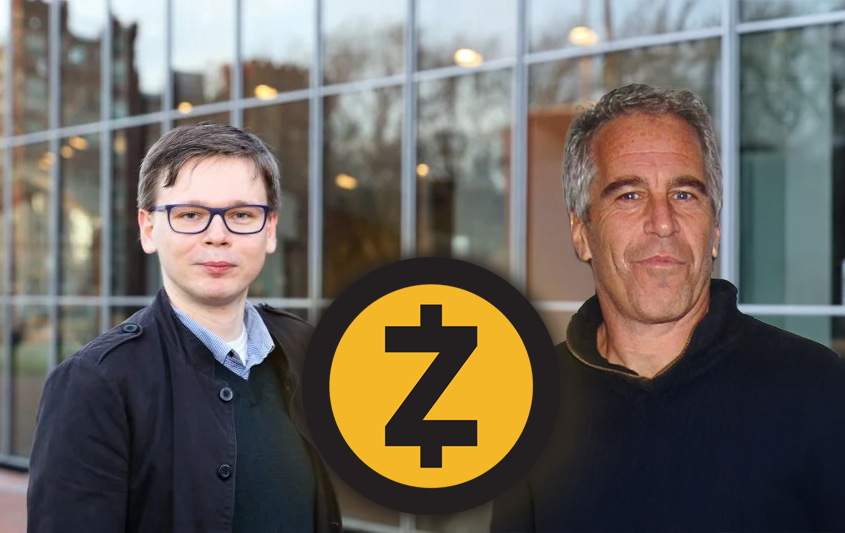
The House Oversight Committee released more than 20,000 pages of documents from Jeffrey Epstein's estate in November, including thousands of emails that continue to reveal the financier's extensive reach into elite circles. Among the findings, communications between Epstein and former MIT Media Lab director Joi Ito highlight discussions about Madars Virza, a co-founder of the privacy-focused cryptocurrency Zcash. This connection adds to a growing body of evidence showing Epstein's involvement in early cryptocurrency development and funding networks.
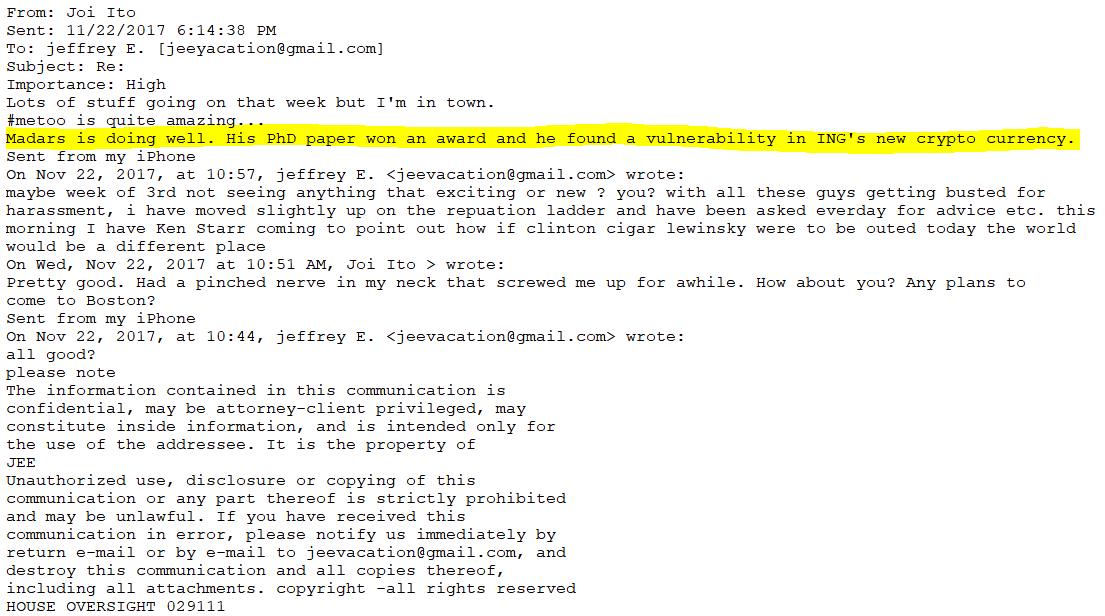
An email dated November 22, 2017 captures casual updates between Ito and Epstein as they planned meetings in Boston. In the 2017 message, Ito notes that Virza is doing well, mentioning his PhD paper award and discovery of a vulnerability in ING's new cryptocurrency.
“Madars is doing well. His PhD paper won an award and he found a vulnerability in ING's new crypto currency.”
The exchange occurs amid broader conversations about current events, including the #MeToo movement and Epstein's rising social invitations following harassment scandals involving others.
In a follow-up email dated May 6, 2019, Ito tells Epstein that he heard he met with Madars Virza.
“That would be great. I've been busy, but good. How are you? Heard you saw Madars.”
These details emerged from a thorough review of the released emails, underscoring the personal nature of their correspondence.
Virza, a respected cryptographer known for his work on zero-knowledge proofs central to Zcash's privacy features, does not appear implicated in any misconduct based on the available information. The Electric Coin Company, behind Zcash, has long emphasized its commitment to secure and private transactions as a core innovation in blockchain technology. Yet the mention of Virza in this context raises questions about how figures like Epstein positioned themselves within emerging tech ecosystems, often through academic and investment channels.
Deeper Layers in Epstein's Crypto Engagements
Epstein's interest in Bitcoin and cryptocurrency extended beyond casual mentions, as other emails in the dump link him to key players in Bitcoin's early days. Correspondence shows meetings at his Manhattan townhouse involving Brock Pierce, a prominent early Bitcoin investor and co-founder of Tether, and Larry Summers, the former U.S. Treasury Secretary. During one such gathering, Pierce positioned himself as a major Bitcoin backer, while Summers expressed cautious optimism about the asset's potential alongside concerns over market volatility and personal reputational risks.
These interactions align with Epstein's pattern of cultivating relationships in high-stakes innovation spaces. Emails from 2015 reveal his role in facilitating donations to MIT's Digital Currency Initiative, which provided critical funding to Bitcoin Core developers during a period of financial instability following the Bitcoin Foundation's collapse. Ito thanked Epstein for the support in an April 2015 message, noting how it enabled the initiative to attract top talent quickly. Such contributions, totaling at least $850,000 to MIT between 2002 and 2017, were often anonymized internally, with Epstein referred to euphemistically to avoid scrutiny.
The Zcash link introduces another dimension, particularly given the project's funding history. Zcash received investments from Digital Currency Group, a major cryptocurrency venture firm where Larry Summers served as a senior advisor from 2016 until at least 2022. DCG's backing of Zcash came through seed rounds, including contributions alongside firms like Pantera Capital and Fifth Era. Summers' involvement with DCG focused on guiding mainstream adoption of digital currencies, though he later distanced himself amid regulatory pressures on the firm. This overlap suggests a web of financial and advisory ties that connected Epstein's network to privacy-oriented projects like Zcash.
Online investigator Michel de Cryptadamus first flagged the Virza emails, drawing attention to their potential significance in the broader Epstein crypto narrative. His post highlighted the 2017 and 2019 exchanges, prompting discussions about Epstein's influence on blockchain privacy tech. De Cryptadamus noted the timing of the 2019 email, which coincided with Zcash's development funding debates, though no direct evidence ties Epstein to those decisions. Community reactions on X ranged from speculation about Epstein's "tentacles" in crypto to calls for deeper archival dives into the remaining documents.
The Oversight Committee's release has fueled ongoing scrutiny of how Epstein maintained influence post-conviction. His nine visits to MIT, often unlogged, and role in securing larger gifts like those from Leon Black, illustrate a deliberate effort to embed himself in academic tech hubs. Black's $5.5 million donation, coordinated through Epstein, supported Media Lab projects, including those overlapping with digital currency research. Ito's 2019 resignation followed revelations of these ties, but the emails provide fresh context on their scope.
Stay In The Loop and Never Miss Important Crypto News
Sign up and be the first to know when we publishAs we sift through the archive, patterns emerge of Epstein as a connector in crypto's formative years. His funding helped stabilize Bitcoin development, while discussions with figures like Peter Thiel, another email contact, influenced views on the technology's role. Thiel's exchanges with Epstein in the mid-2010s, post-2008 plea deal, show ongoing dialogue about innovation and risk. Similarly, emails with Bitcoin Core developer Jeremy Rubin point to Epstein's involvement of protocol-level work.
Zcash's privacy emphasis sets it apart from Bitcoin's transparency, making the Virza connection noteworthy. The project's reliance on zk-SNARKs, pioneered by Virza and team, addressed blockchain anonymity needs. Yet Epstein's orbit, including ties to Summers via DCG, hints at centralized influences in what was billed as decentralized finance. DCG's investments spanned over 70 crypto firms, amplifying its reach.
The full implications of these revelations remain unclear, as the estate's documents represent a curated subset. Researchers urge continued examination, warning that more links may surface. For the crypto community, the findings prompt reflection on early funding sources and their long-term effects. Transparency in blockchain's origins, ironically, now relies on traditional oversight mechanisms to uncover hidden threads.
Epstein's death in 2019 halted further legal reckoning, but these emails ensure his shadow lingers over tech and finance. They remind stakeholders of the need for rigorous vetting in high-growth sectors. As cryptocurrency matures, understanding these historical intersections could inform future governance and ethical standards. As research continues, additional releases may further clarify Epstein’s role in projects like Zcash or others.
We created an Epstein Bitcoin Email archive to go through all the newly released Epstein emails relating to Bitcoin, cryptocurrency, and blockchain, to search through all the communications for important information relating to this topic. Try it out!