
Bitcoin Hash Rate Drop Aligns with Historical Bullish Recovery Trend

Bitcoin's network hash rate has experienced a notable 4% drop over the past month, marking the most significant decline since April 2024. This shift comes amid ongoing challenges for miners following the latest Bitcoin halving event, which reduced block rewards and intensified pressure on operational margins. Analysts at VanEck have highlighted this development as a potential indicator of stronger performance ahead for Bitcoin, based on historical patterns.
Patrick Bush and Matthew Sigel from VanEck attribute the recent hash rate reduction to miner capitulation. Higher-cost Bitcoin mining operations have powered down machines due to falling mining profitability from lower Bitcoin prices and the post-halving revenue squeeze. Some facilities are redirecting power resources toward more lucrative AI workloads, a trend that could further impact Bitcoin's computational network in the near term.
VanEck's research draws on data since 2014 to show how hash rate movements have correlated with Bitcoin's price action. When the 30-day hash rate growth turned negative, Bitcoin delivered positive returns over the following 90 days in 65% of cases, outperforming periods when hash rate rose, which saw positive returns 54% of the time. The pattern strengthens over longer horizons.
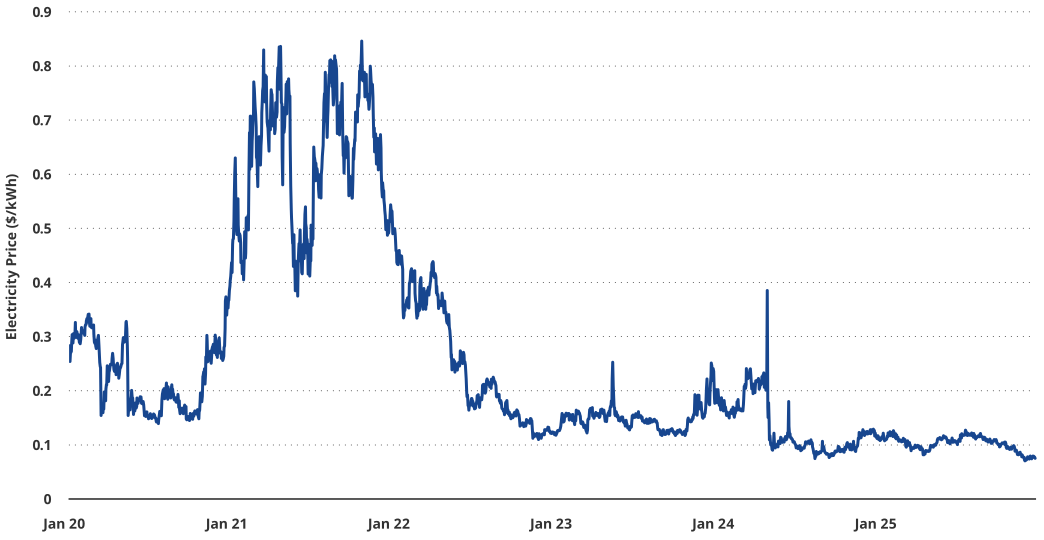
Historical Performance After Hash Rate Declines
Over 180-day periods following negative 30-day hash rate growth, Bitcoin posted positive returns 77% of the time. The average gain reached 72% during these stretches, compared to 48% when hash rate activity increased. These figures suggest that periods of mining stress and reduced network power often precede rebounds as the ecosystem adjusts and weaker participants exit.
The current environment reflects broader industry dynamics. Miners face elevated costs and competition for energy resources, especially as AI demand grows. Yet Bitcoin's protocol and network has demonstrated resilience in past cycles, with difficulty adjustments helping to stabilize operations for remaining participants.
VanEck's observations point to cautious optimism. Long-term holders have shown restraint, avoiding widespread sales during the pullback. The combination of miner capitulation and historical precedents offers a framework for understanding potential market shifts in the months ahead. As the network adapts, Bitcoin's fundamentals remain anchored in its decentralized structure and growing adoption.
Bitcoin traded around $88,000 as of the time of the report, down 1% over the previous 24 hours. This level comes after a volatile period, with the asset down more than 20% in the fourth quarter 2025. We will continue to monitor macroeconomic factors and institutional flows, market sentiment, and other elements, which could influence near-term direction.